Customer acquisition is a key challenge for marketers: from new regulations to ever-increasing amounts of promotional messages, the hustle for attention never stops. 70% of marketers even say that converting customers and leads into sales is their top priority!
Customer experience also plays a key role in acquiring both first-time and repeat clients. The current acquisition landscape is crowded and dynamic — and when standing out is harder than ever, making a smashing first impression is key. Today, marketers have to be smarter about acquisition strategies: instead of casting the widest net possible, being more targeted pays.
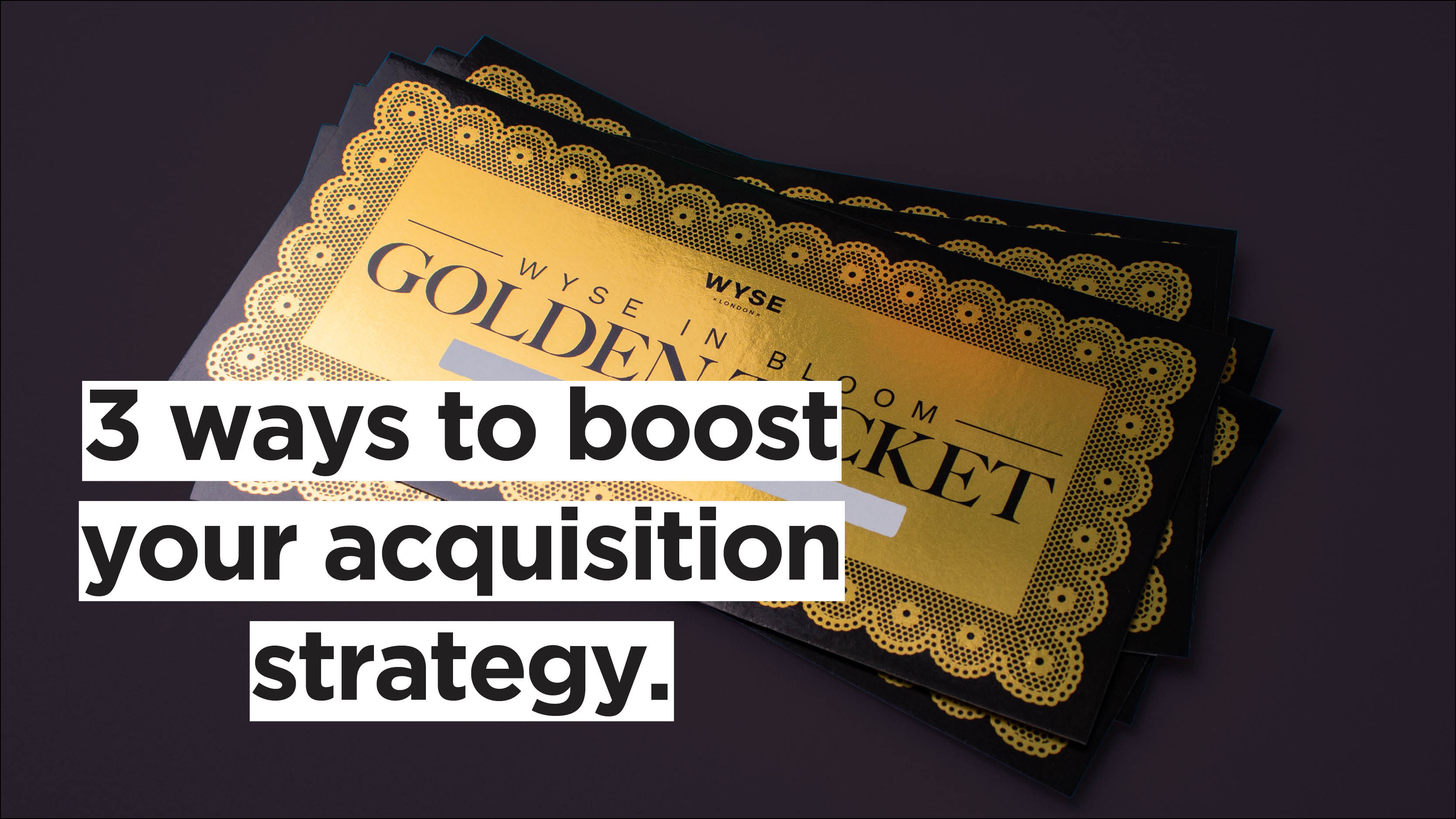
Customers have many purchase channels available, so an omnichannel approach is a marketer’s best bet. Mail is a somewhat underrated channel that (perhaps surprisingly) delivers more than ever. And there are three highly effective ways to boost acquisition through mail: Partially Addressed Mail, Direct Mail, and Door Drops.
A recent MarketReach report asks: how to target potential new customers in specific postcode areas, without requiring their personal data? And can using certain types of mail significantly increase the effectiveness of other media channels? We have the answers to these (and more!)questions right here.
The Acquisition Landscape
But what exactly makes the current acquisition landscape so difficult for marketers?
In a post-GDPR world, many brands and companies have watched their marketing lists shrink, making attracting new subscribers a clear priority.
Marketreach reports findings from Pure 360 and Hubspot:
- Consumer trust is declining: 55% of customers say they don’t trust the brands they buy from as much as they used to.
- Consumers are tuning out: Sales and marketing professionals say that, with difficulty increasing, capturing the customer’s attention and generating traffic and leads are their biggest challenges.
- 40% agree that prospecting is currently the toughest part of the sales process.
- 16% say they’re struggling to incorporate social media in their sales process.
What’s Trending?
Intoday's evolving acquisition landscape, certain clear trends are emerging that are valuable to keep in mind when designing an effective strategy. Some of the most important factors include:
Consumers Use Digital and Non-Digital Channels Equally
Non-digital channels aren’t obsolete! Currently, customers crave both digital and physical experiences, so striking the right balance is crucial in your marketing.
When finding out about new products and services:
- 79% use at least one digital channel
- 79% use at least one traditional channel
Multi-Channel Strategies Help Maximise Conversions
Research from Smart Insights shows that integrated multi-channel marketing plans (including channels like direct mail, email, social media, TV, and digital) maximise conversions: organisations that adopt them consistently stand out, gain qualified leads, and maximise conversions at all stages of the customer lifecycle.
Consumer Trust in Advertising is Declining
Today’s consumers seem to be getting no break from ads, which has eroded their trust in brands that continuously “harass” them. According to DMA, when people find a type of marketing messaging that resonates with them, they’re more likely to show a stronger sense of trust. Mail is one of those media: 87% of consumers rate messages delivered by mail as believable (compared to just 48% who rate email as trustworthy), and 65% feel confident that the contents of their mail are private and secure.
Mail Is Helping to Drive Cut-Through
Research from MarketReach shows that mail is remembered 35% more than social media and 49% more than email. Thanks to new technologies like Programmatic Mail, augmented reality, and automation platforms such as dotdigital, mail stands out even more today.
Retention Is Increasingly Important as an Acquisition Method
According to Hubspot, 90% of happy customers are more likely to purchase again.
How Can Mail Boost Your Acquisition Strategy?
Thanks to its physical and tactile nature, mail is fantastic at grabbing your customers’ attention. This makes it a proven channel for boosting acquisition.
Its physicality not only puts your brand directly in the customer’s hands, but also makes it extremely memorable. And in today’s landscape, where using third-party data is a particular concern, mail is a highly targeted and responsible way to cut through media noise.
The Power of Mail as an Acquisition Medium
- Reaches almost 30 million households across the UK.
- Appeals to all ages and life stages.
- As a direct result of receiving mail, 38% of consumers bought or ordered products or services.
It Boosts Other Media
According to a neuroscience research by Marketreach:
- When primed by mail, people spent 30% longer looking at social ads.
- Memory encoding (what people remember after seeing something)for social media ads was 44% higher when people had seen mail first.
Did You Know?
Contrary to popular belief, paper is uniquely renewable and sustainable. The vast majority of paper nowadays comes from carefully managed sources that prioritise reforestation, welfare, and sustainability. The European forests from which most of the raw material comes have grown by an area the size of Switzerland in just 10 years!
Partially Addressed Mail: Target New Customers Without Personal Data
How does one target new customers without accessing their personal data? By using Partially Addressed Mail!
Partially Addressed Mail lets you reach small clusters of around 15 carefully selected households by postcode, rather than by name. That makes it a highly targeted (and highly responsible) way to reach new customers.
There are two ways to build your targeting:
- “Topping up”: mailing new prospects in postcode areas whereyou already have existing customers.
- “Lookalikes”: targeting new postcode areas identified as similar to where your current customers live.
Combine both approaches, and you'll get broader coverage of potential customers, giving your campaign a stronger chance of success. A simple trick to boost engagement further: use relevant titles instead of a name. It adds a personal touch that grabs attention fast.
Why It Works
- Broad reach: Partially Addressed Mail offers bespoke targeting by postcode, and for every 100 items sent, 9% get passed on and shared with someone else.
- High engagement: 88% of items are opened, read, filed, or set aside for later, and the format engages people across every age group, from millennials to retirees.
- Drives commercial action: 26% of Partially Addressed Mail drives an action like purchasing or going online.
- Kept and revisited: items are looked at four times on average and stay in the home for around a week.
Direct Mail: Reach New Customers in a Personal Way
If you have a database (whether it's your own or third-party data), Direct Mail (DM) turns it into a genuinely personal acquisition tool. Because it's addressed to a named individual, it opens a one-to-one relationship between your brand and the prospect in a way few channels can match.
That personal touch matters: 70% of people say mail makes them feel more valued, compared to just 30% who say the same about email. It's also part of why DM achieves a 94% engagement rate. Your brand isn't just landing in an inbox; it's landing in someone's hands.
Why It Works
- Broad reach: mail can be delivered to every UK address, six days a week.
- Highly engaging: DM benefits from a 94% engagement rate, and stays in homes for an average of 7.6 days. Even the heaviest mobile users interact with addressed mail 4.3 times on average.
- Kept and revisited: DM is revisited 4.2 times on average, and 45% is still live in the home after 28 days.
- Drives commercial action: 31% of addressed mail drives anaction such as going online, buying something, or visiting a store.
It's also a myth that direct mail only appeals to older audiences. Millennials interact with DM 3.8 times on average, and 18–24 and 25–34 year-olds respond faster than any other age group — 63% of millennials who respond within three months go on to purchase.
Door Drops: Reach More Households, Locally or Nationally
Door Drops are one of the most flexible and cost-effective ways to put leaflets, flyers, and brochures directly into customers' hands — whether you're targeting a single local area or going nationwide. That flexibility makes them ideal for store openings, events, or promoting services in a specific area.
And they work hard: 90% of campaigns that included doordrops saw an increase in new customers, compared to just 59% of campaigns that didn't. 67% of people said they were prompted to buy after receiving one.
Why It Works
- Broad reach: choose from almost 30 million relevant households across the UK.
- Highly engaging: door drops achieve a 73% engagement rate, and for every 100 sent, 5% are shared with someone else — a bigger audience than you paid for.
- Kept and revisited: items stay in the home for 5.4 days on average, get revisited 2.8 times, and 14% are still present after 28 days.
- Drives commercial action: 67% of people were prompted to buy after receiving a door drop.
Door drops also appeal well beyond the audience you might expect. Consumers with the heaviest mobile use interact with door drops 2.8 times on average, a similar rate to how often they engage with digital brands like Netflix and Instagram.
Bringing It Together
In a landscape where trust is harder to earn and customer attention is stretched thin across dozens of channels, mail offers something genuinely different: a physical, tactile touchpoint that customers remember, revisit, and act on. Used well, it boosts the performance of your other channels too.
Whether it's Partially Addressed Mail for responsible, data-light targeting, Direct Mail for personal one-to-one engagement, or Door Drops for flexible local and national reach, there's a mail format to match your acquisition goals. The real opportunity lies in weaving these into a genuine omni-channel strategy, rather than treating mail as an afterthought.
Want to talk through which approach fits your next campaign? Get in touch, we'd love to help.