Celebrating Almost 2,000 Years of Paper
Our world may be increasingly digital, but that doesn’t mean paper has lost any significance in our lives. Nearly 2,000 years after its invention, paper continues to play a vital role in how we share ideas, communicate, and create lasting connections. And it’s not going anywhere.
Digital hasn’t replaced paper — it works alongside it. Screens are fast and convenient, sure, but paper adds something extra: a tangible, reliable, human experience that endures beyond the scroll.
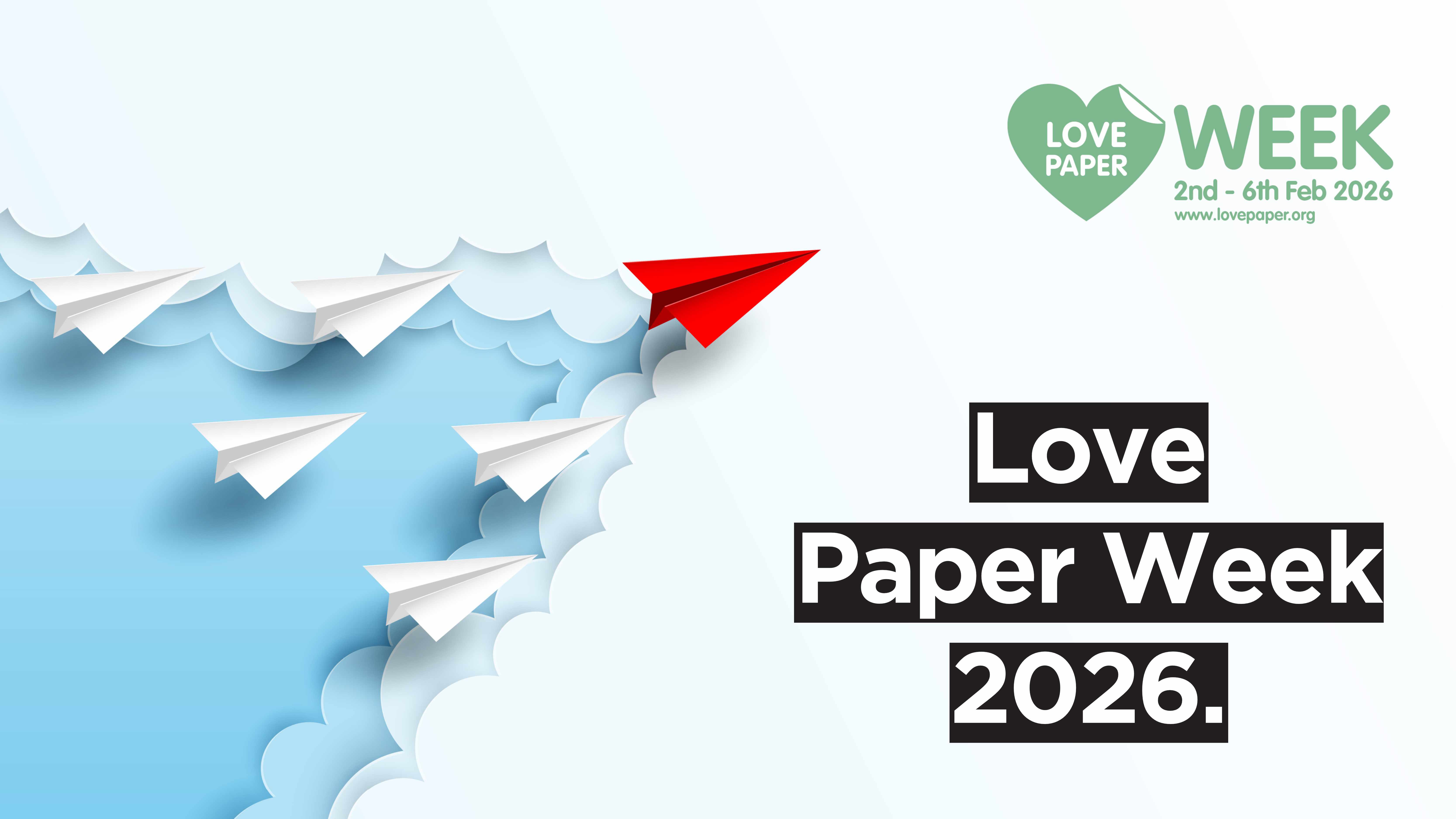
That’s what Love Paper Week is all about. Love Paper Week is a global industry initiative that runs from 2nd–6th February, bringing together printers, paper merchants, packaging manufacturers and brands to champion paper and sustainability. The week is all about sharing the facts, tackling common myths, and reminding businesses and consumers why paper remains a responsible, effective and attractive medium in a modern world.
Today’s paper is also greener than ever. Despite its bad rap, paper in 2026 is renewable, recyclable, and high performing.
Still, misconceptions about paper and print persist — especially when it’s compared to digital communication. During Love Paper Week, let’s set the record straight.
The Most Common Myths About Paper — Debunked
Myth: Digital communication is more environmentally friendly than print
Truth: This is one of the biggest myths. Digital communication has a growing (yet hidden to most) environmental footprint. Every ad, file, and stream sits on servers, data centres, networks, and devices that never sleep.
In the UK alone, the digital sector accounts for around 4.75% of total greenhouse gas emissions, roughly on par with the waste sector. Digital may be invisible, but its environmental impact is very real.
Myth: Printed materials cause waste
Truth: Paper is one of the most prominent examples of a circular economy. In Europe, around 75–79% of paper is recycled, the highest recycling rate of any material. Paper fibres are recycled an average of 3.5 times, keeping valuable resources in use for as long as possible.
Myth: Paper production uses excessive amounts of water
Truth: Water is essential in papermaking, but most of it is reused and recycled multiple times within mills. The industry continues to optimise water use, significantly reducing consumption over time.
Myth: Paper production emits high levels of greenhouse gases
Truth: The paper, pulp, and print sector is one of the lowest industrial emitters of CO₂, accounting for just 0.8% of emissions in Europe. Additionally, approximately 62% of the energy used by European paper mills comes from renewable sources: modern production processes keep emissions low and efficiency high.
Myth: Paper is bad for the environment
Truth: Paper is made from wood fibre — a renewable, recyclable, and sustainable resource. It plays a key role in the circular economy and supports responsible forest management.
Myth: Forests in Europe are shrinking
Truth: European forests are growing. Forest cover has increased by millions of hectares over recent decades, expanding by the equivalent of around 1,500 football pitches every day. Between 2005 and 2020 alone, European forests grew by more than 58,390 km² — an area larger than Switzerland — while continuing to support biodiversity, employment, and carbon storage.
Myth: People prefer digital communication
Truth: Digital and print both have their place. Research shows people often prefer paper for important, long-lasting, or trust-based communications.
Digital messages can be overwhelming and easily forgotten. Printed materials — brochures, documents, packaging, and books — are tangible, memorable, and can be revisited without getting lost in a drowning inbox.
Myth: Print is outdated
Truth: Science proves it — print works. People remember printed materials for longer, and when used thoughtfully alongside digital channels, print delivers real impact and value.
Myth: Paper can’t compete with digital speed
Truth: While that is technically true, paper isn’t about speed. It’s about lasting impact, reliability, and connection. Not everything needs to be instant to be effective.
Myth: Recycling paper is complicated and inefficient
Truth: As we mentioned when debunking the waste myth, paper is one of the easiest materials to recycle, and one of the most widely recycled. The paper recycling rate in Europe in 2023 was 79%, with an estimated practical maximum of 80%. With high collection rates and well-established recycling systems across the continent, paper recycling is both efficient and effective.
Giving Paper the Credit It Deserves
Paper supports renewable resources, sustainable forests, and a low-carbon, circular economy. It captures carbon, stores it in wood fibre, and continues to deliver value long after it’s been used.
This Love Paper Week, let’s give paper the credit it deserves — practical, impactful, and far kinder to the planet than many people realise.