People unconsciously personify brands — and just like you tend to trust people with reliable personalities, you’re more likely to trust brands with a consistent look and feel.
A thorough brand style guide (also called a brand book or brand guidelines) makes it easy for anyone within an organisation, as well as external contractors, to represent the brand effectively — and consistently.
What Is a Brand Style Guide?
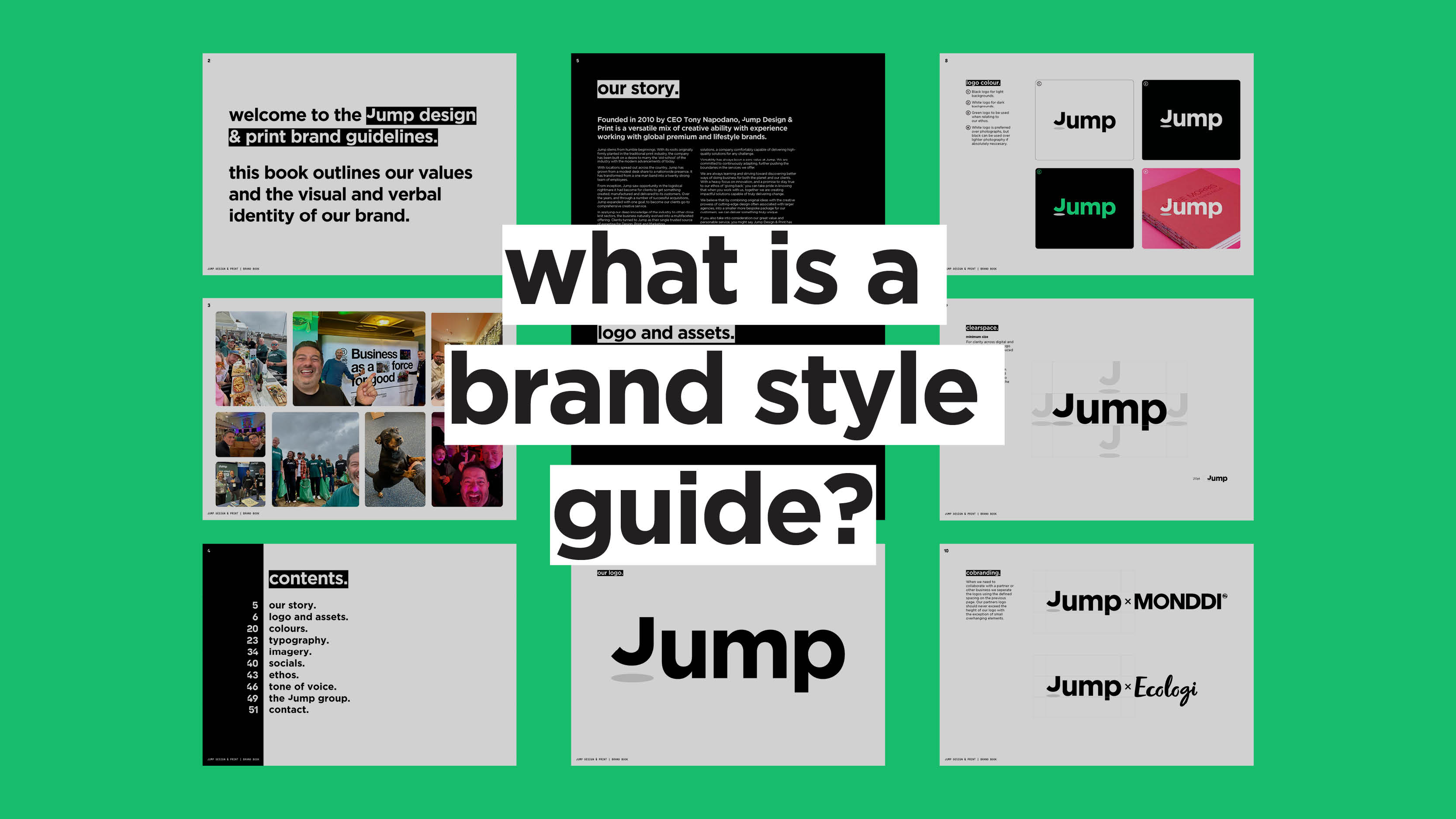
But what exactly is a brand style guide? It’s a document that defines how your brand looks and sounds across media. In short, it’s the single source on how the brand communicates and should be presented; a rulebook for fonts, logo usage, colour schemes, and tone of voice.
Who Needs a Brand Style Guide?
Simply put, if more than one person creates content (customer communications, graphic design, social media, marketing materials, and so on) for your business, you need a brand style guide. And, the earlier you establish brand standards, the better!
Why Is a Brand Style Guide Important?
A style guide is essential to making sure your company produces on-brand, consistent work. This is especially important if you rely on contractors, firms, and agencies outside your company, who may not know your brand as intimately as you or your employees. Consistency builds trust with your audience, which in turn drives recognition and revenue.
What Does a Brand Style Guide Need to Include?
A brand style guide is essentially your brand’s bible that all comms should refer back to. Here is what should be included in your brand guidelines.
Brand Identity

Firstly, and perhaps most importantly, your style guide should clearly establish your brand’s identity.
Defining the brand’s personality, highlighting its core values, and the unique selling points that set it apart from the competition is the first step to creating an effective style guide. You should also take the time to explain the company’s name and tagline: these are the elements that make it memorable!
In this section, you should begin describing the visual identity: a brand’s first impression is often visual, so it’s important to establish the key details of its graphic elements from the outset.
Lastly, you can also introduce your intended audience and the customer personas who make it up. The more intimately your creatives know the brand’s audience, the more effectively they will communicate with them.
Brand Tone of Voice
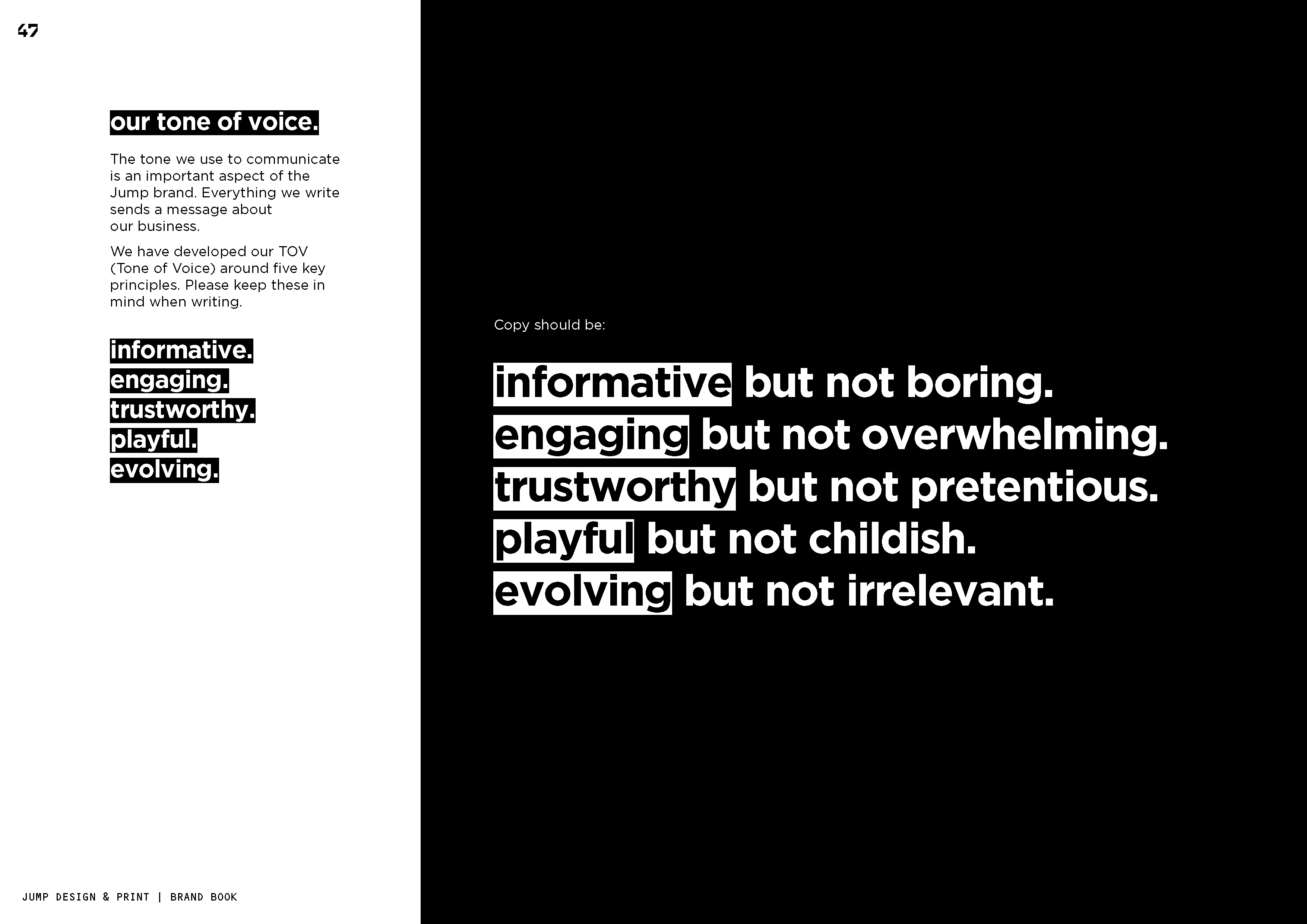
Your brand’s TOV is another fundamental part of its identity. Let’s break down why.
“Voice” is who your brand is at its core, and should stay consistent throughout all communications.
“Tone”, on the other hand, is how you apply that voice in context. It’s how you make a formal legal disclaimer and a casual Instagram caption both feel like you.
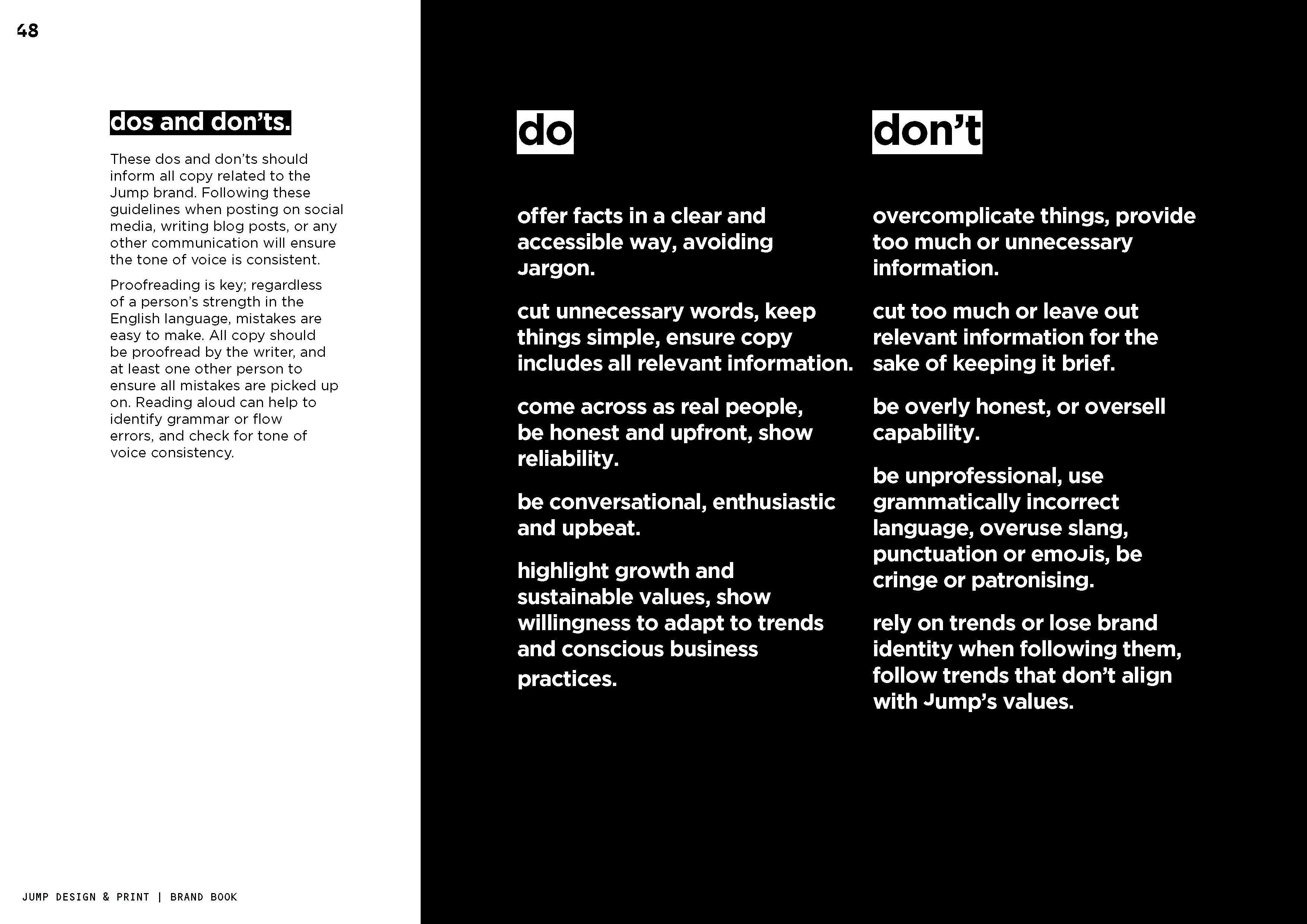
TOV guidelines should reflect an understanding of the brand’s target audience and the purpose of the communication. A good TOV guide includes 3-5 descriptors of your brand personality, examples of on-brand vs off-brand copy, and directions on how tone shifts depending on context.
Logo Usage Rules
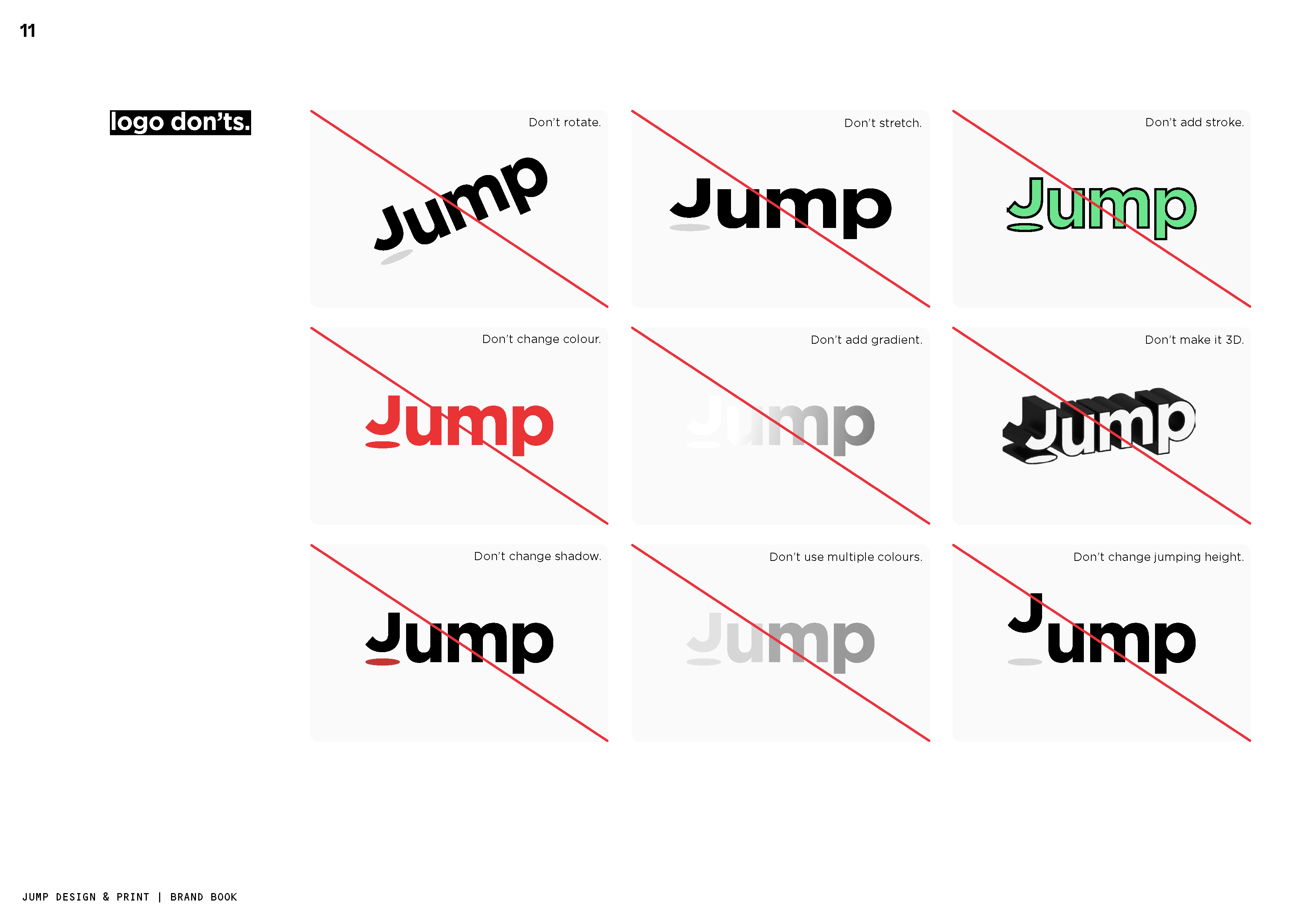
To prevent employees, vendors, and contractors from unintentionally devaluing your brand mark, your style guide should include clear logo usage rules.
These rules should outline every approved version of your logo (primary full logo, secondary, icon-only, light and dark variants), minimum size requirements, clear space rules, and prohibited actions (like stretching, recolouring, or adding drop shadows).
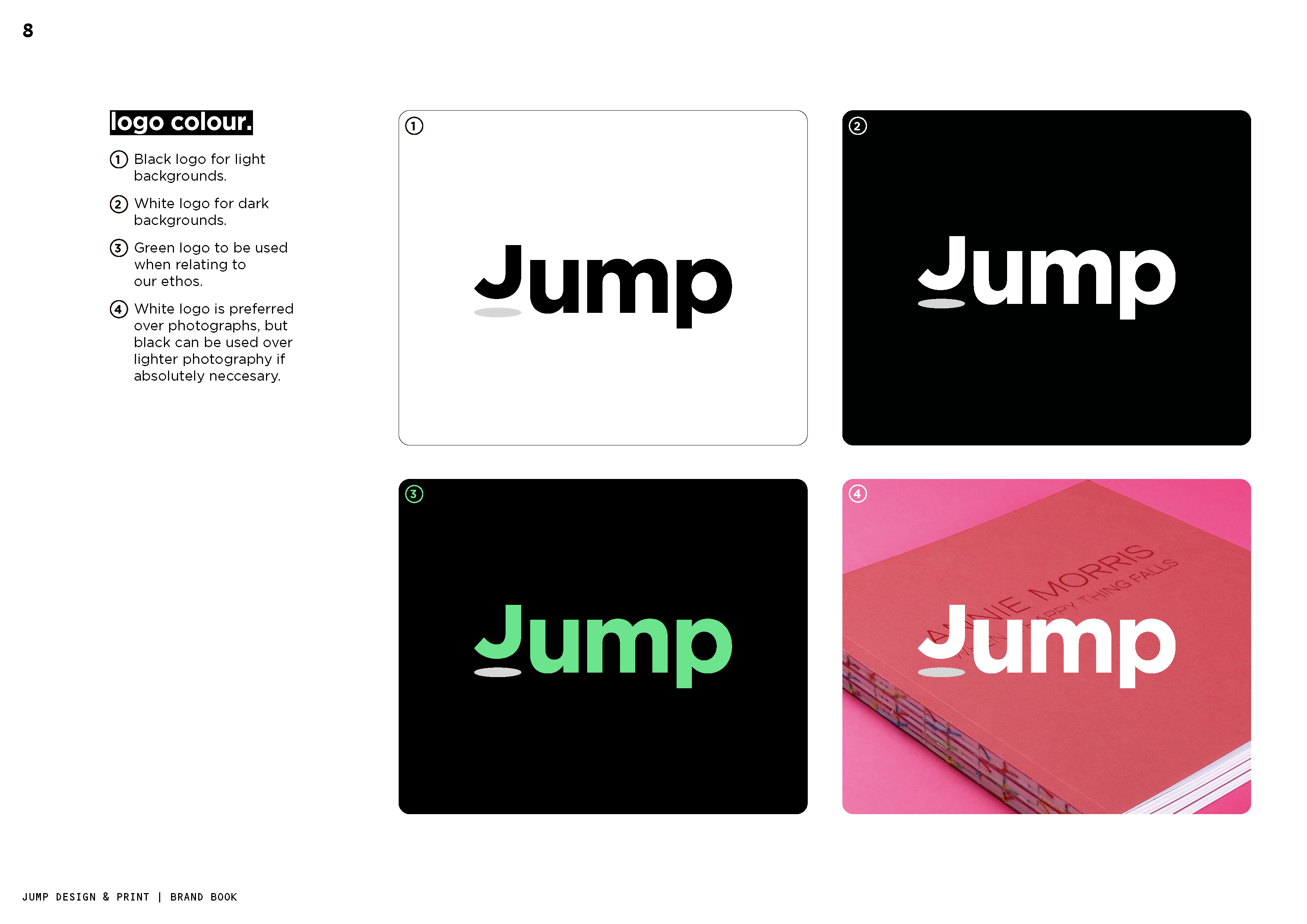
In this section, it’s important to be specific about the proportions and alignment of your logo’s design and text elements. You might want to include a visual list of do’s and don’ts to make it as clear as possible.
Colour Palette
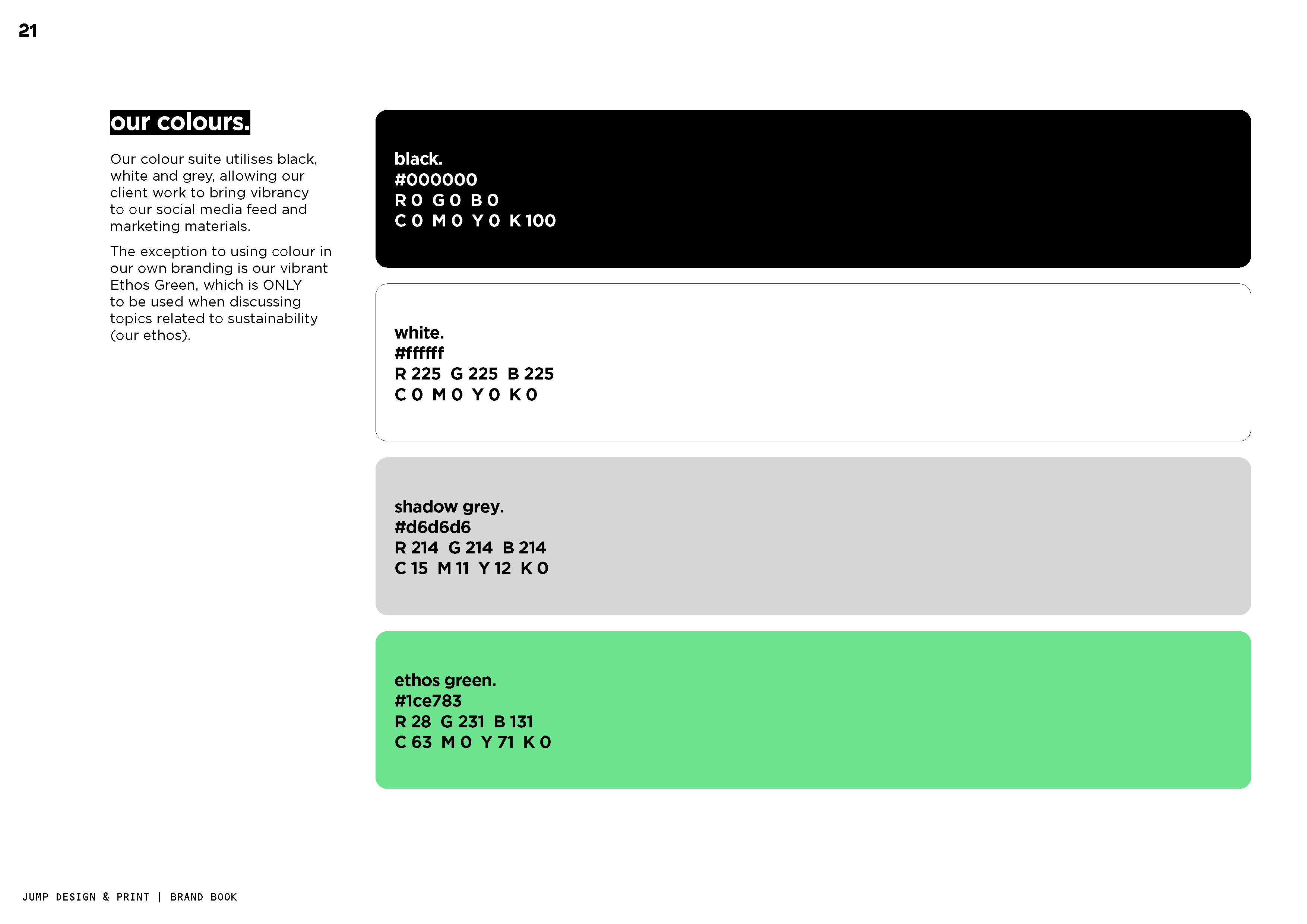
Colour is a fundamental part of your brand’s visual identity, so remember to specify your colour palette in your style guide.
Establish primary and secondary colours, and which colours work best for backgrounds, text, and accents. It's also helpful to identify any combinations to avoid for accessibility and maintaining visual harmony.
Lastly, don’t forget to include exact HEX codes, RGB and CMYK values, and Pantone matches for each shade. This way, your team, partners, and suppliers can replicate the colours accurately every time.
Typography
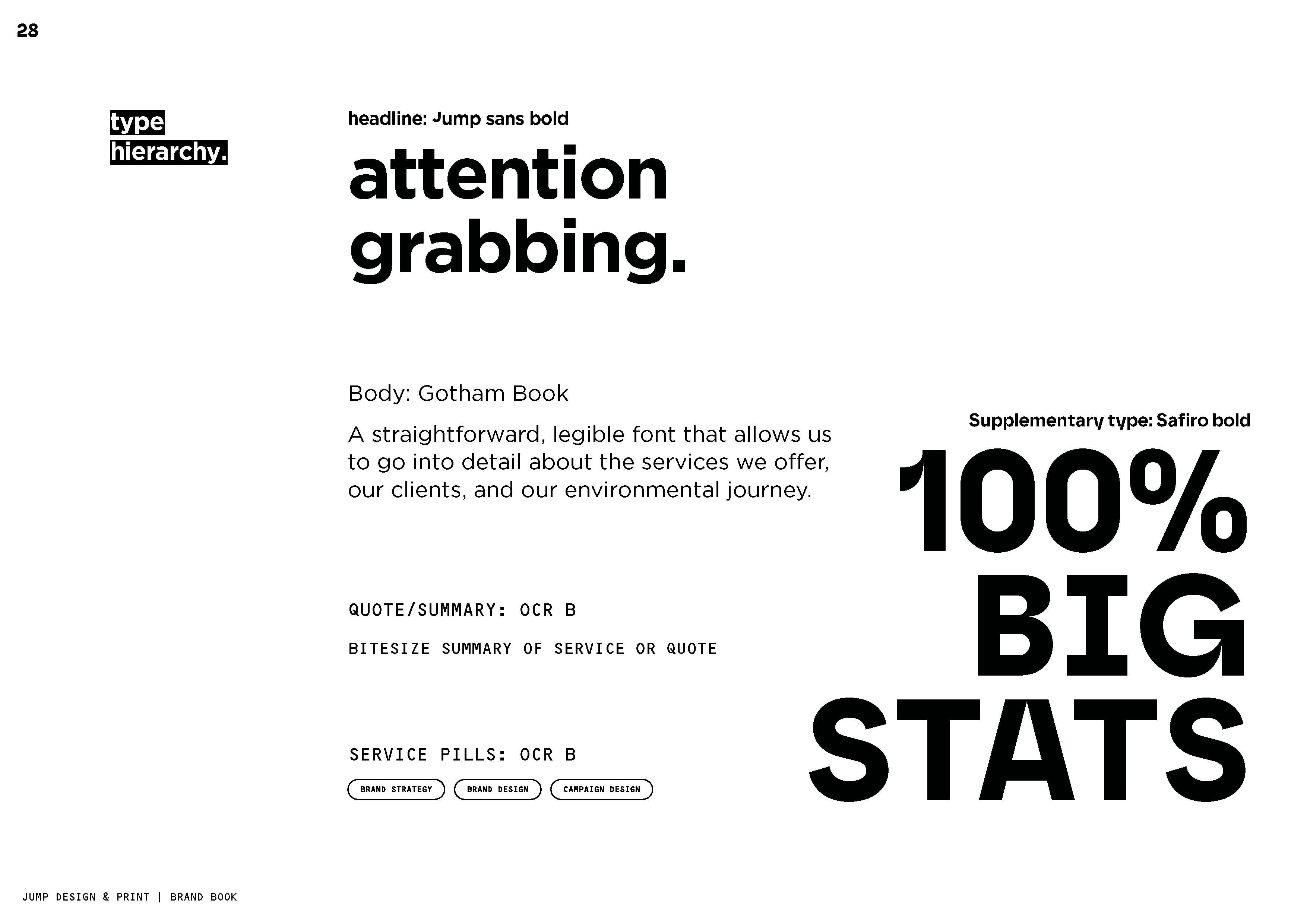
Consistent typography is one of the fastest ways to make a brand feel polished and intentional — which is why this section is so vital to your brand guidelines.
Specify the (usually two or three) approved brand typefaces, their use cases (headline font, body font, accent font…), and important details like desired size and sizing relationships, letter spacing, line height, and weight. No matter what font family the brand uses, designers should stick to it consistently.
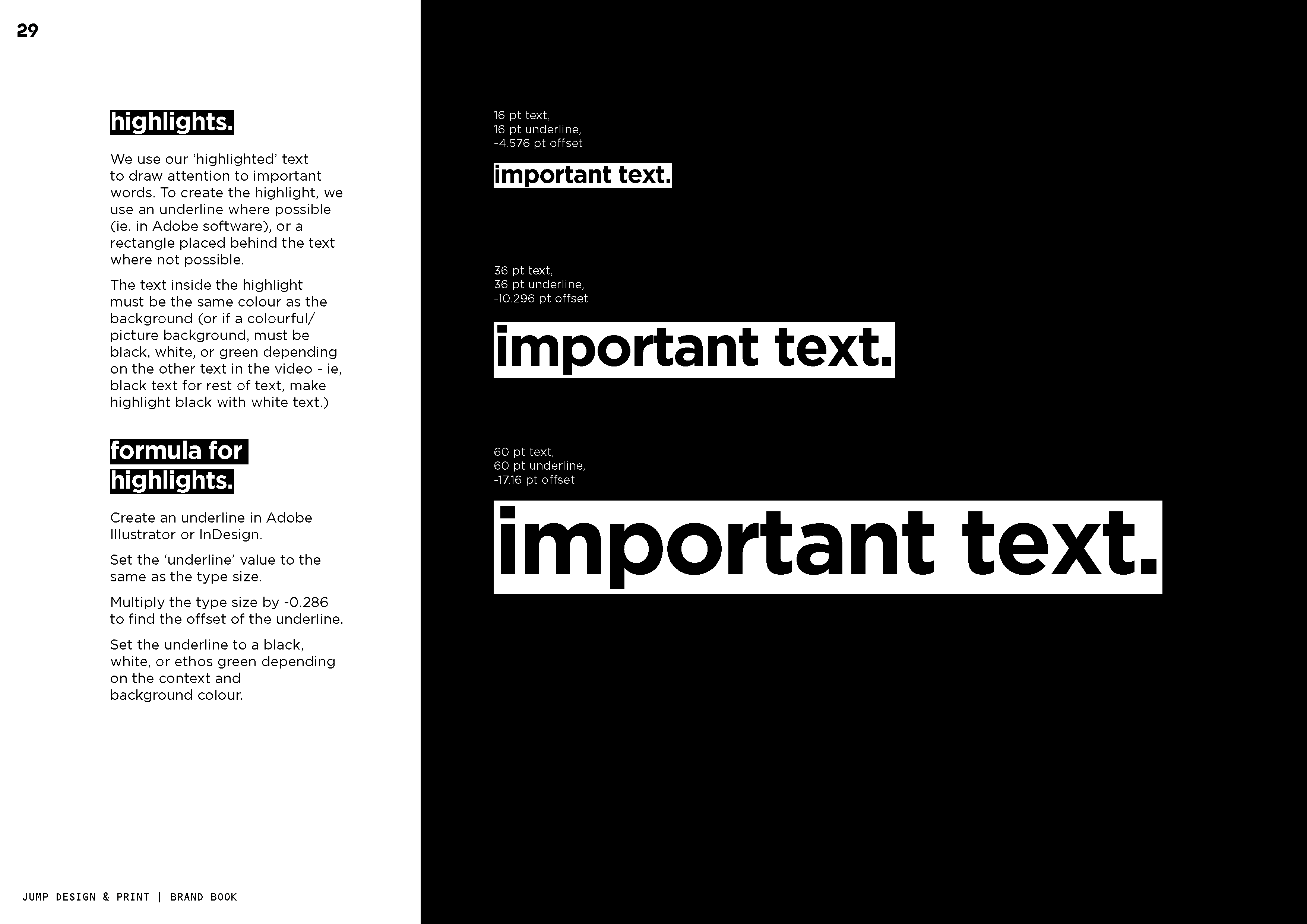
Lastly, include web styles for developers or fallback fonts for websites where your font might not load.
Photography and Visual Style
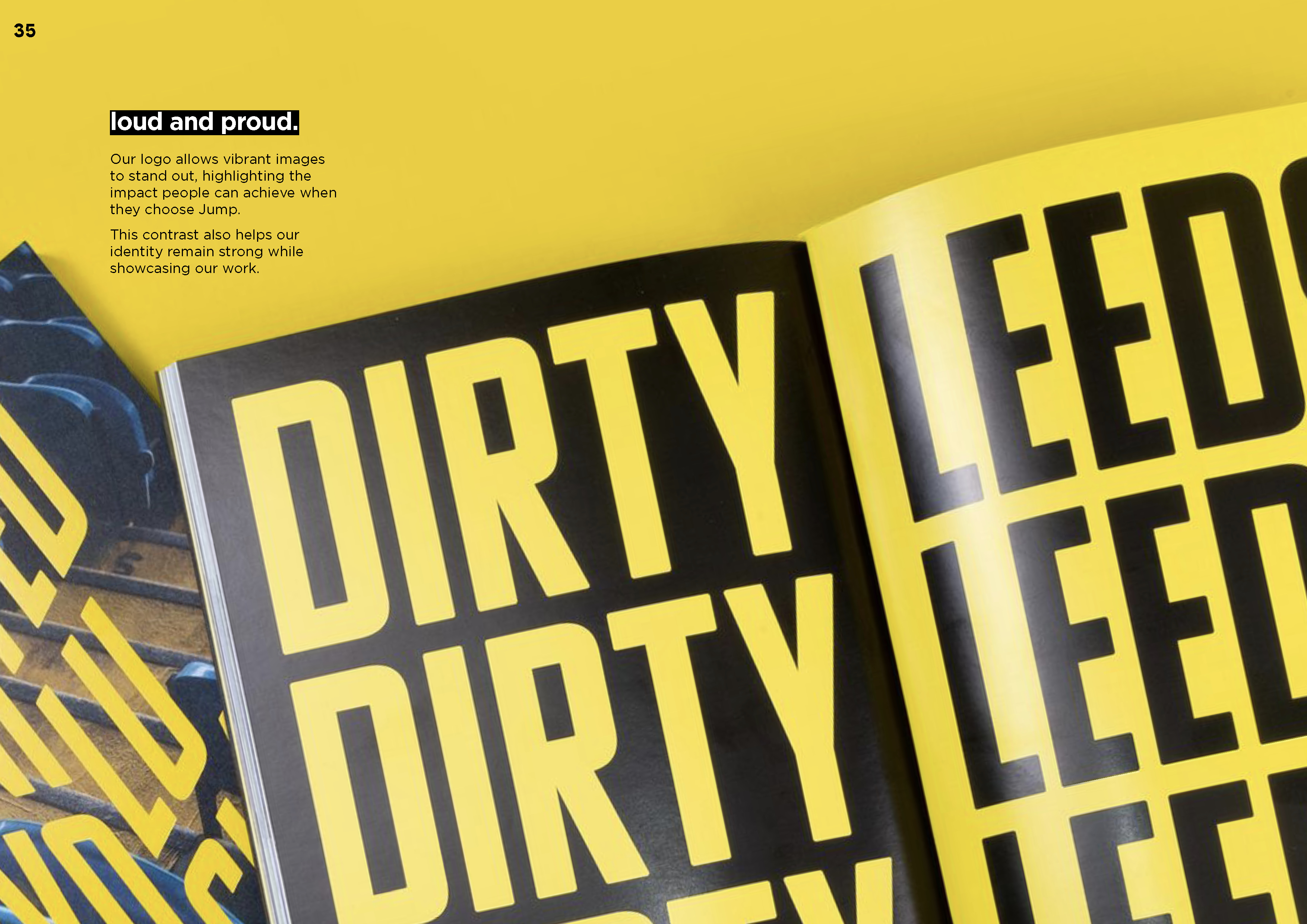
This section describes the photography direction, the image style your brand uses. Whether it’s cinematic, moody tones, candid lifestyle shots, sleek product photography, or bright and airy imagery, your brand’s visual style should match your buyer personas and what will resonate most.
You can also include approved and disapproved example images for extra clarity.
How To Get a Brand Style Guide for Your Business
As Part of a Full Branding Project
When you hire an agency for a full branding project, brand guidelines are usually delivered alongside your logo, colour palette, and typography system. This approach is the most comprehensive, as the guidelines are built alongside your brand itself.
Retroactively Documenting an Existing Brand
If you would rather document an existing brand, don’t worry: a branding specialist like Jump can help. Our designers will audit your current materials, standardise what works, and produce a brand style guide from them.
FAQs
How Long Should a Brand Style Guide Be?
For most businesses, a 12–25-page document is enough to include all the essential information without being overwhelming, making it easy to revisit whenever needed.
What Format to Use?
PDF is the most common format for referencing and sharing, and often includes linked source files.
Is a Brand Style Guide the Same as a Brand Kit?
While both a brand style guide and a brand kit are necessary for consistent brand execution, they aren’t the same thing.
A brand kit is simply a collection of files: logos in various formats, colour swatches, fonts, imagery, etc. In short, while the style guide contains the rules, the kit contains the assets.