When we first pursued B Corp certification at Jump, we approached it much like many businesses do. We saw it as a way of being externally verified for our sustainability efforts. It mattered to us because it certified our initiatives at a time when more companies were being asked to show, rather than simply claim, that they were operating responsibly.
That instinct was not wrong, but it was incomplete. Looking back, what we wish we had understood more clearly at the outset is that certification may be an end goal, but it is not the end goal. It is a meaningful achievement in its own right, and it should be treated as such, but its real value lies in what it pushes a business to do next. The mistake is to see the certificate as the culmination of the work, when in practice it is far more useful as the starting point for a more disciplined and demanding phase of it.
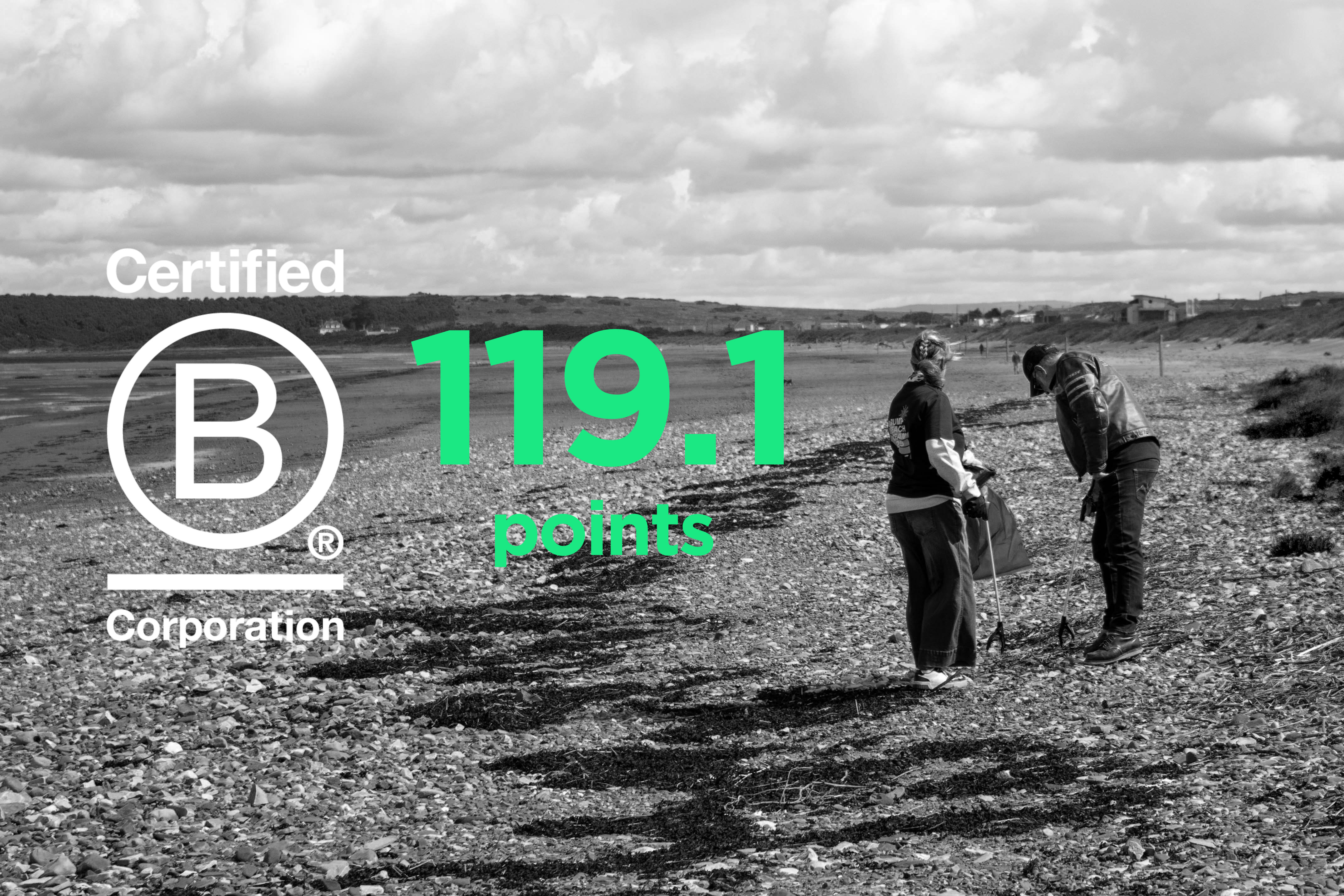
Under the older B Corp model, it was easier to fall into that way of thinking. There was always an expectation that certified businesses would continue improving, but the framework was less explicit about what that improvement should look like over time. In practical terms, that made it easier for companies (including us!) to focus on getting the 80-point score, navigating verification, and reaching the point where they could say they had made it. The spirit of continuous improvement was there, but the route beyond certification was less clearly structured, which meant the process could too easily be experienced as a destination.
The new (V2) standards change that to some extent. With more clearly defined improvement expectations at year 3and year 5, B Lab has made it much harder to treat certification as a static achievement. From our perspective, that is a welcome development, because it brings the framework closer to the reality many businesses have already discovered for themselves. The real value of B Corp does not sit in the certificate itself, but in the systems it forces you to strengthen, the blind spots it compels you to confront, and the discipline it introduces into parts of the business that might otherwise remain too informal or too easy to avoid.
That was certainly one of the most important lessons for us at Jump. At its best, the process exposes what has not yet been properly embedded. It asks difficult questions about governance, environmental performance, culture, accountability, and day-to-day decision-making, and those questions are often more valuable than the final score. They force a business to move beyond broad intentions and into the harder territory of systems, ownership, evidence, and follow-through.
That is why we now see certification as a foundation rather than a finish line. Its significance is not diminished by saying that. If anything, it becomes more valuable, because it stops being treated as a badge to be won and starts being understood as a framework to build from. For us, that means using it to strengthen internal accountability, improve how impact is measured, sharpen our governance, and ensure that the principles we talk about are more consistently reflected in how the business actually operates.
There is also a wider point here. Too often, certifications of any kind are spoken about as though they provide closure. They rarely do. The strongest businesses are not the ones that pass an assessment and settle into self-congratulation, but those that allow the process to unsettle them a little, because that discomfort is often where the useful work begins. Once you have gone through a framework like B Corp seriously, you have fewer places to hide. You know more about where your gaps are, where your systems need work, and where your ambitions still run ahead of your practice.
That, ultimately, is what we wish we had known before we started. B Corp certification was absolutely a goal for us, but it shouldn’t have been seen as the final one. The more important challenge was always going to be what came afterwards: whether we would use the process as a platform for becoming a better business over time. From where we stand now, that is the real test, and it is also where the real value lies.