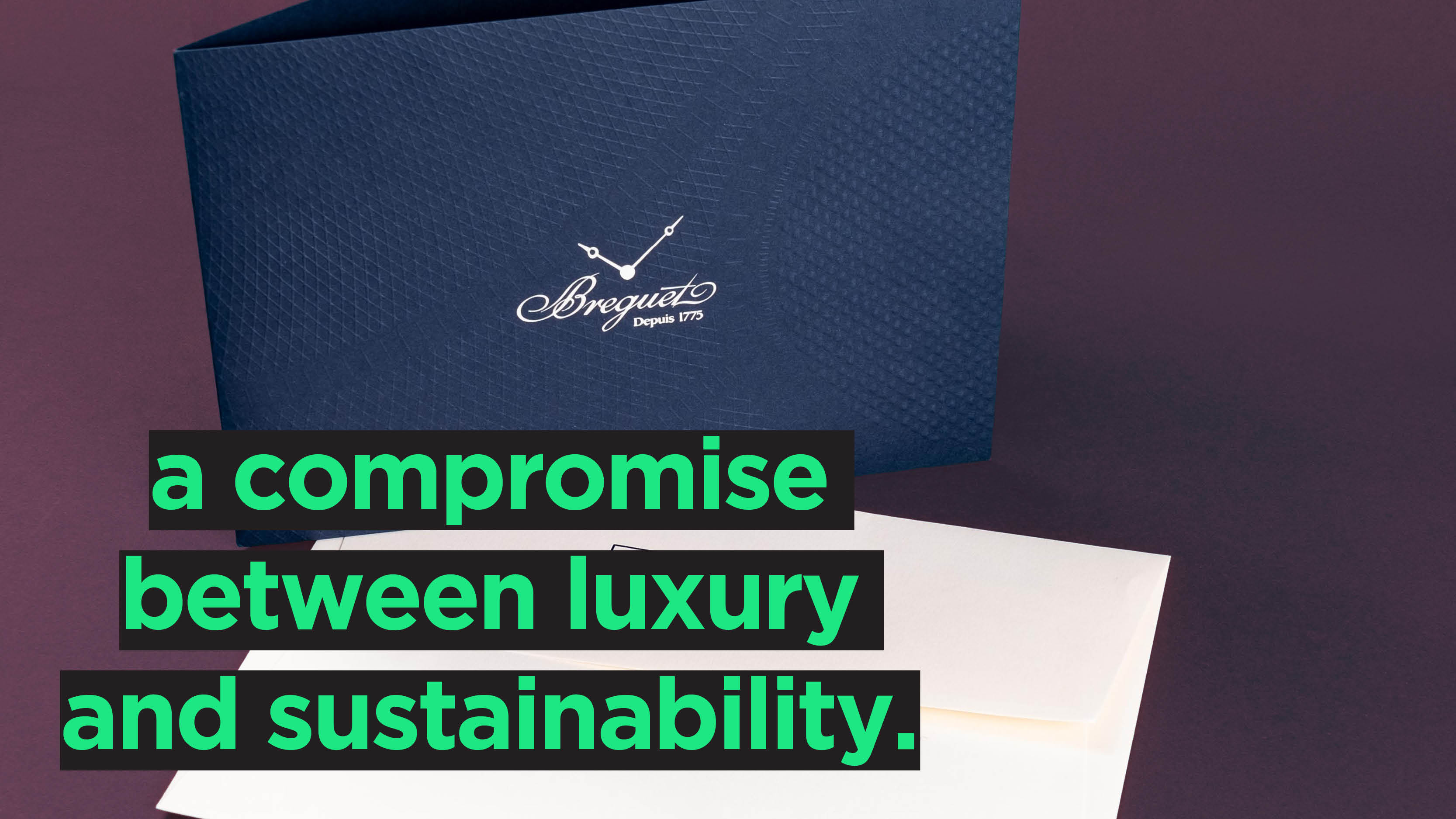
SPOILER ALERT: It is not a compromise.
For years, luxury and sustainability have been treated as though they sit at opposite ends of the table, politely acknowledging one another while assuming they have very little in common.
Luxury has traditionally meant beautiful materials, rich finishes, and the kind of tactile detail that makes you pause before putting something down. Sustainability, meanwhile, has too often been portrayed as the poorer quality option, worthy and responsible, perhaps, but less exciting and made from inferior materials.
We think that idea belongs firmly in the recycling bin.
The best sustainable print should never ask you to lower your expectations. Instead, it should give you the same freedom to create something beautiful, distinctive and exceptionally well-made, while encouraging better decisions about how it is produced.

What Makes Print Feel Luxurious?
Luxury print is often defined by the details.
Is it the weight and texture of a beautifully selected paper stock?
Is it the feel of an embossed mark beneath your fingertips?
Is it the way a piece opens, folds or reveals its message?
Is it the precision of a foil, the depth of a deboss, or the simplicity of a beautifully executed design?
All of these things can create a sense of quality, and none of them automatically requires wasteful or environmentally irresponsible production.
Highly tactile finishes can be applied to premium, FSC-certified papers, including high-end uncoated, textured and coated stocks. Responsible material choices do not have to look rough, feel recycled, or come in fifty shades of pale brown.
In many cases, thoughtful design creates a more luxurious result by removing unnecessary clutter and giving the materials, finishes, and message more room to breathe. A carefully chosen paper, an intelligently specified finish, and a beautifully executed layout can create significant visual impact without harming the planet...
Sustainability Is Bigger Than Recycled Paper
One of the biggest misconceptions about sustainable print is that it begins and ends with choosing recycled paper.
Recycled paper can be a brilliant choice, but it is only one of many possible choices, and it may not always be the right one for the project.
A high-quality virgin fibre paper sourced from responsibly managed, FSC-certified forests can be part of a credible sustainable print specification. These papers can deliver exceptional brightness, strength, texture, print reproduction and finishing performance while providing assurance that the fibre has come from responsibly managed sources.
Sustainability is therefore about understanding the full picture rather than relying on a single material claim.
Where did the fibre come from? Is the paper certified? How much material is genuinely required? Can the finished item be recycled? Will a coating, adhesive, foil, or laminate affect its end of life? Can different components be easily separated? Is the piece designed to last, or will it be discarded almost immediately?
These questions help us make creativity more considered, instead of stifling it.

Look Beyond the Paper
The stock may be the most visible part of a printed piece, but it is only one part of its environmental impact.
How is the printer powered? Does the production site use electricity from fully renewable sources? Is energy efficiency actively monitored and improved? Are modern presses and finishing equipment being used efficiently? How are paper offcuts, inks, plates, packaging and other production wastes managed?
It is also worth considering the wider business behind the print.
Does the printer measure its greenhouse gas emissions? Has it established credible reduction targets? Does it use certified materials and maintain effective environmental management systems? Can it provide clear evidence to support the claims being made?
Transport matters too. A carefully specified material can lose some of its advantage when unnecessarily moved among multiple suppliers, production sites, and finishing partners. Bringing processes together, using efficient distribution and reducing the weight or volume of the finished item can all contribute to a better result.
Sustainable print is not one paper choice or one badge on a specification sheet, but the combined result of decisions made across the entire project.
The Finish Matters, But So Does the Future
There is something undeniably satisfying about a special finish. Foiling, embossing, debossing, textured papers, and precision die cutting can transform a simple piece of print into something memorable.
Those finishes can still have a place within sustainable print.
The key is to understand the materials involved, use them with purpose, and consider what they mean for the finished product. Some foils and decorative processes can be compatible with paper recycling when used appropriately, while certain laminates, plastic windows, mixed materials and difficult-to-separate components may create greater challenges.
That does not mean every luxurious detail needs to be removed. It means every detail should have a reason to be there.
A premium print piece should feel valuable enough to keep, share or display. It should communicate quality before a single word has been read. When finishes are chosen carefully, they can extend the useful life of the piece and help the material work harder.
Sometimes the better choice is a recyclable finish. Sometimes it is a highly durable coated item designed to remain in use for years. Sometimes it is reducing the size, weight or number of components while increasing the quality of everything that remains.
There may not be one perfect answer for every project, but there is almost always a more informed one.
Less, But Much Better
Luxury brands have enormous power to influence how people value materials.
When something is beautifully designed and produced, people are less likely to treat it as disposable. They hold onto it, reuse it, display it and remember it.
This creates an opportunity to move away from excessive packaging and towards purposeful print that delivers more impact with less material.
Could two components become one? Could a box be smaller? Could a brochure remain useful beyond a single campaign? Could an insert become a piece of art, a guide or a keepsake? Could a more tactile paper or carefully selected finish deliver the desired impact without adding another layer of packaging?
Sustainability becomes much more interesting when it is treated as part of the creative brief rather than a checklist completed once the design has already been approved.

Ask Better Questions
The best results begin with the right conversation.
What does the piece need to achieve? How long should it last? How will it be transported? Which materials are genuinely necessary? What will happen to it at the end of its life? Which finishes create meaningful value, and which are simply there because they have always been there?
Then we can look further.
Is the paper responsibly sourced? Is the printer using renewable electricity? Can the number of production processes or transport movements be reduced? Is the format efficient? Can the environmental claims be evidenced clearly and confidently?
These questions allow design, performance, cost and environmental impact to be considered together from the beginning.
When sustainability is built into the creative process, it can shape the format, inform the material choice and encourage smarter production decisions without taking anything away from the finished result. It becomes part of what makes the piece good.
No Compromise Required
Luxury and sustainability are entirely compatible ambitions.
Both value quality, care, materials, craftsmanship, and longevity. Both work best when every detail has been carefully considered, and every component has a clear purpose.
The future of luxury print lies in creating beautiful things with intelligence and care from the very beginning. That can mean premium FSC-certified paper, exquisite tactile finishes, renewable energy, efficient production, lower-impact transport, and a clear plan for the material at the end of its useful life.
You can have exceptional design, rich materials, beautiful print reproduction, tactile finishes, and an unforgettable result. You can also make informed choices, reduce unnecessary impacts and create something that reflects the values behind your brand.
Speak to the Jump team to discover how we can create beautiful, luxurious print with a lighter and more carefully considered environmental footprint.